

Welcome to the Dynamic Soccer Coaching Substack. This post is the first in a series called “Defining Your Game Model.”
As youth soccer coaches, we’re always looking for ways to learn, grow, and develop our craft. And there is no shortage of ideas out there for how to quickly and effectively improve. It can be overwhelming! Should I take this coaching course? Should I listen to this podcast? Should I download this PDF of training games and activities? (Should I subscribe to the Dynamic Soccer Coaching Substack? Yes!)
It’s a lot.
And honestly I’m a big fan of lots of the content out there. If we look in the right places, there’s some great stuff.
But if you asked me: “What’s the best way to improve my coaching?”, my answer would be this:
Define your game model.
More than any coaching course, more than any training activity, more than any new method, a clear and coherent game model is the best way to improve our coaching.
What Is a Game Model?
So: what is a game model? A game model is a coach’s idea(s) for how we want our teams to play. That’s it. Nice and simple.
And when we define game model like that, we see that we all have one. Every coach has ideas about how we want our teams to play. Those ideas may be radically different from one coach to the next, but the simple fact is that the ideas themselves just are the game model, which shows that every coach has one.
The problem, of course, is that some game models are clear and coherent, while others are chaotic or concealed. The ideas are there, but they may not fit together logically or they may be unknown (to both players and coaches alike!).
And this results in a kind of haphazard way of looking at the craft of coaching. If our game model is unclear or incoherent, we will be less effective as coaches. Our training sessions will be more random than ordered, more off-the-cuff than intentional. And this is a problem because the more random and off-the-cuff our coaching is, the more likely it is to be idiosyncratic.
In other words, if we don’t have a clear game model, our coaching will gravitate toward the things we like the most or are most comfortable with, rather than encompassing the whole game. Our teams will be less likely to play in repeatable ways, which means our match results will be more random. We will (unintentionally) leave out important things in training which our players need to know or do in order to develop. In short, if we don’t have a clear game model, we will let down our teams, our players, and ourselves.
So, as a way to take some first steps away from this chaos and toward clarity, let’s consider a few basic types of game models.
Types of Game Models
Style-Based Game Models
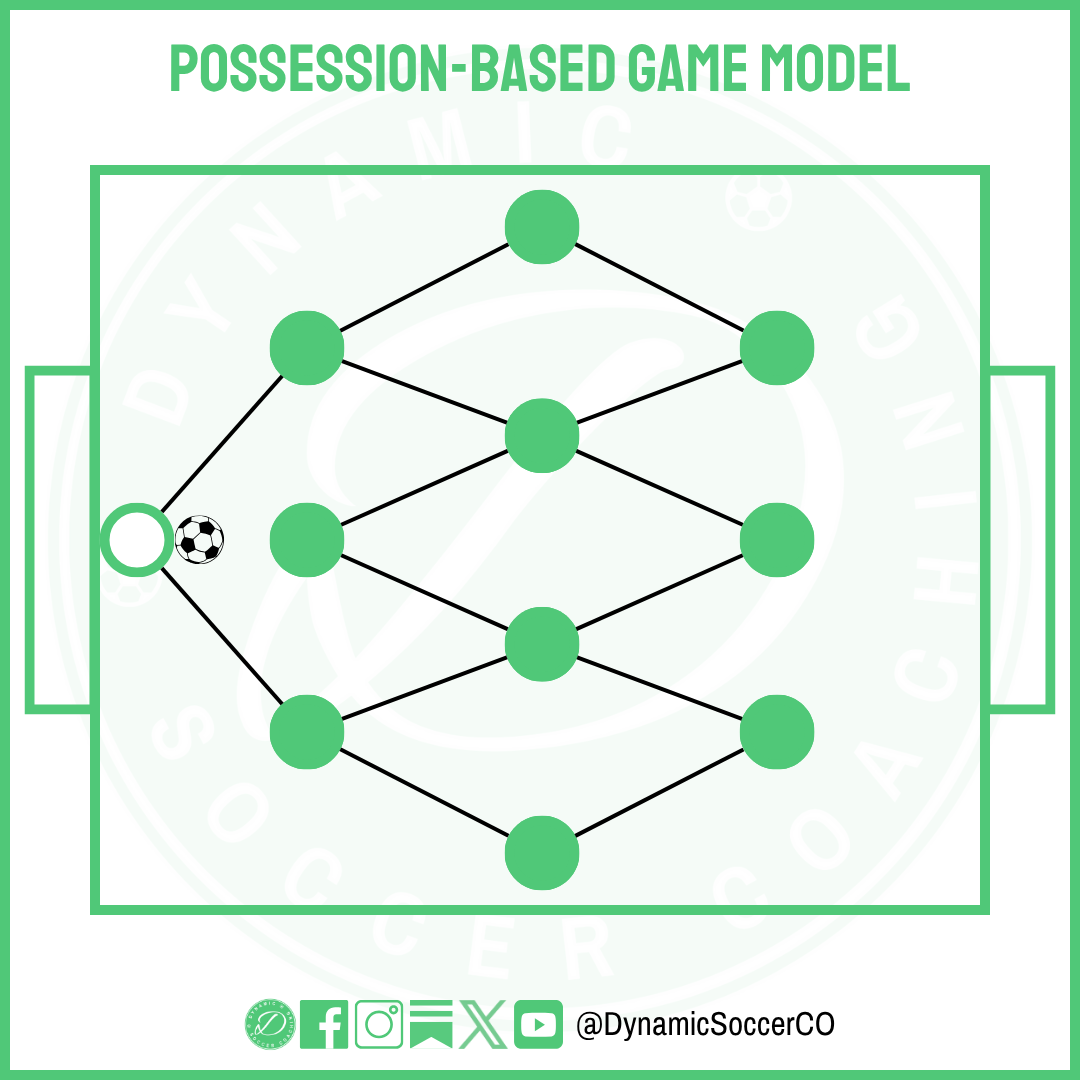
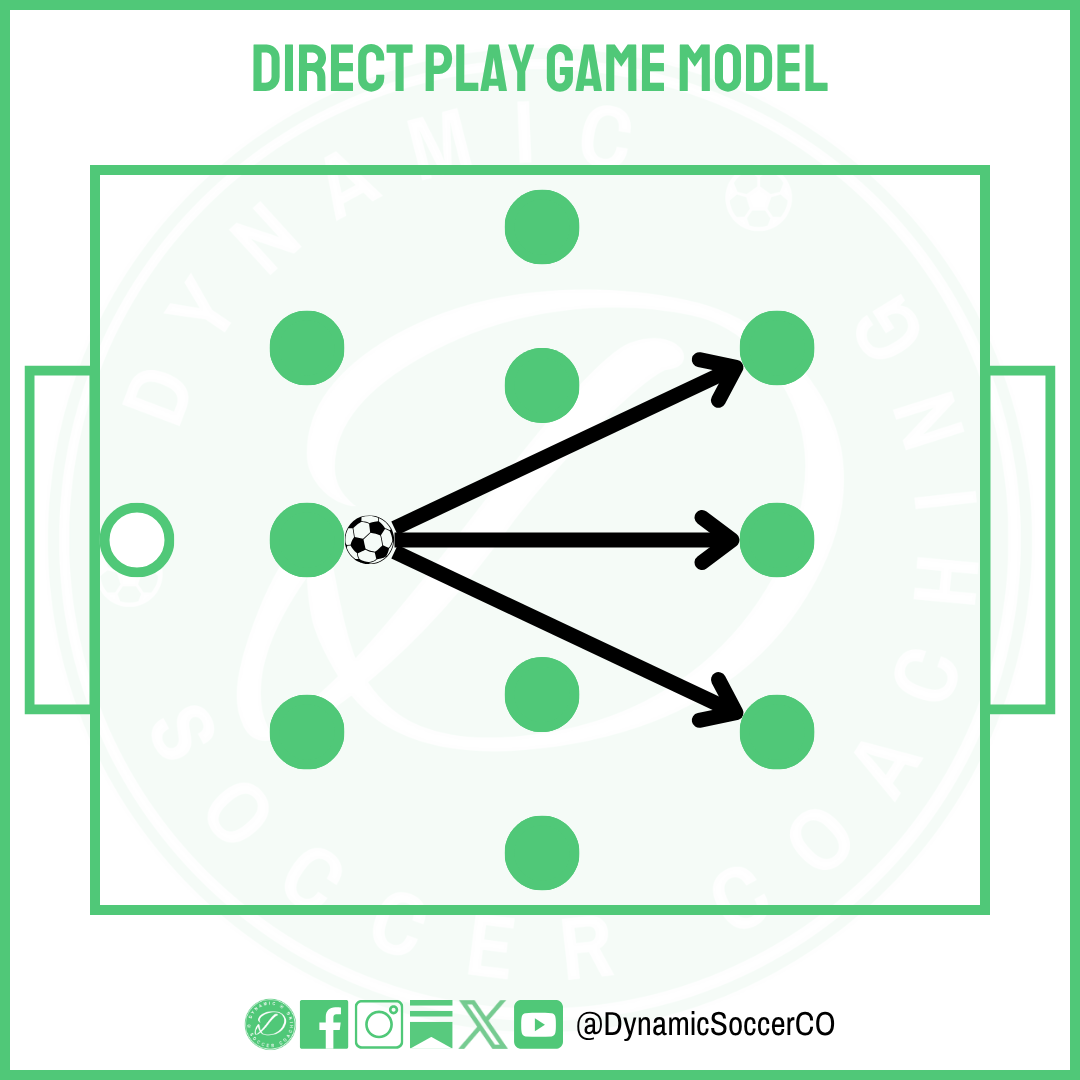
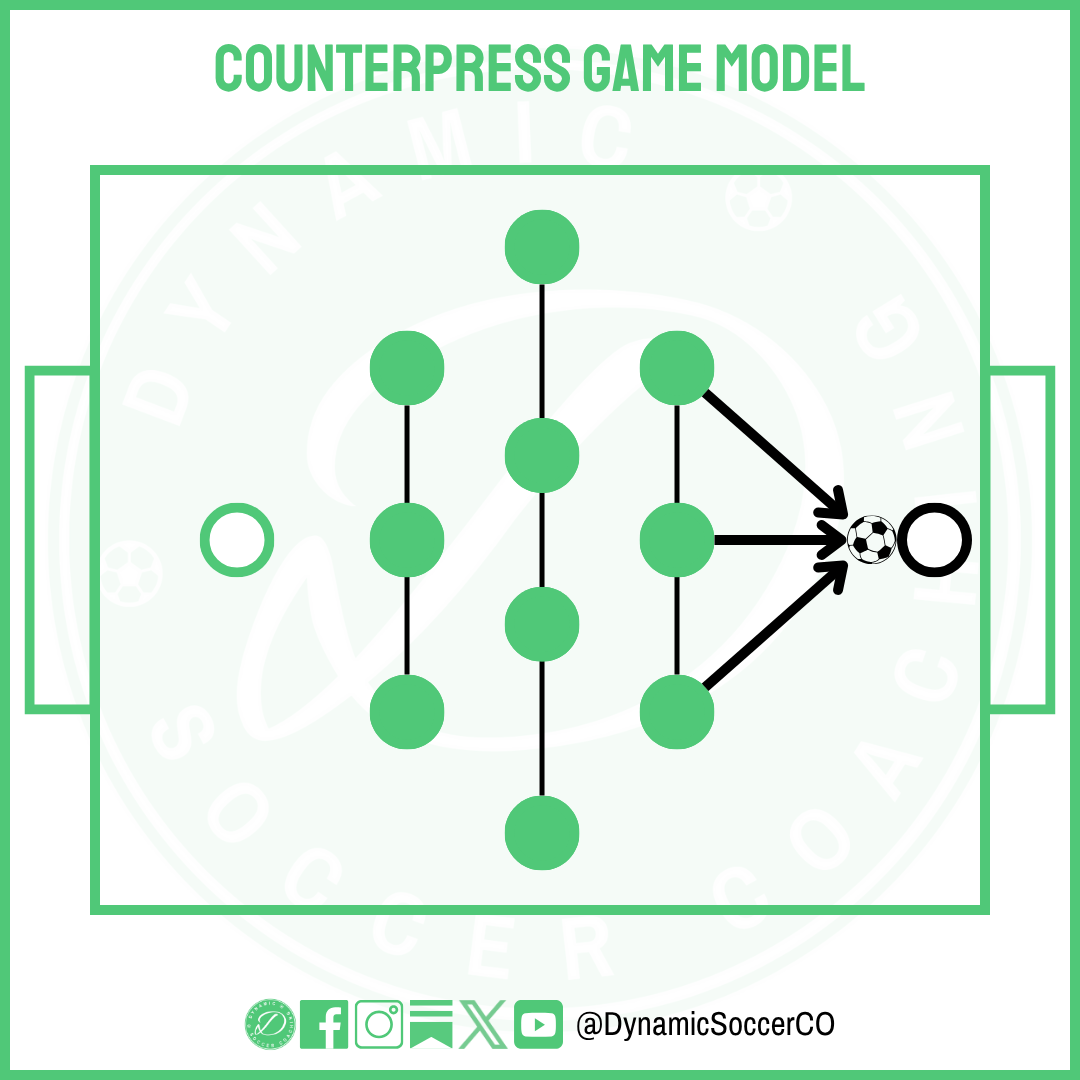
A style-based game model is one in which a coach starts with a particular style of play in mind. The ideas in the model, then, all relate to that style.
Here are four of the most popular styles of play:
Possession-based
Direct Play
Counterpress
Counterattack
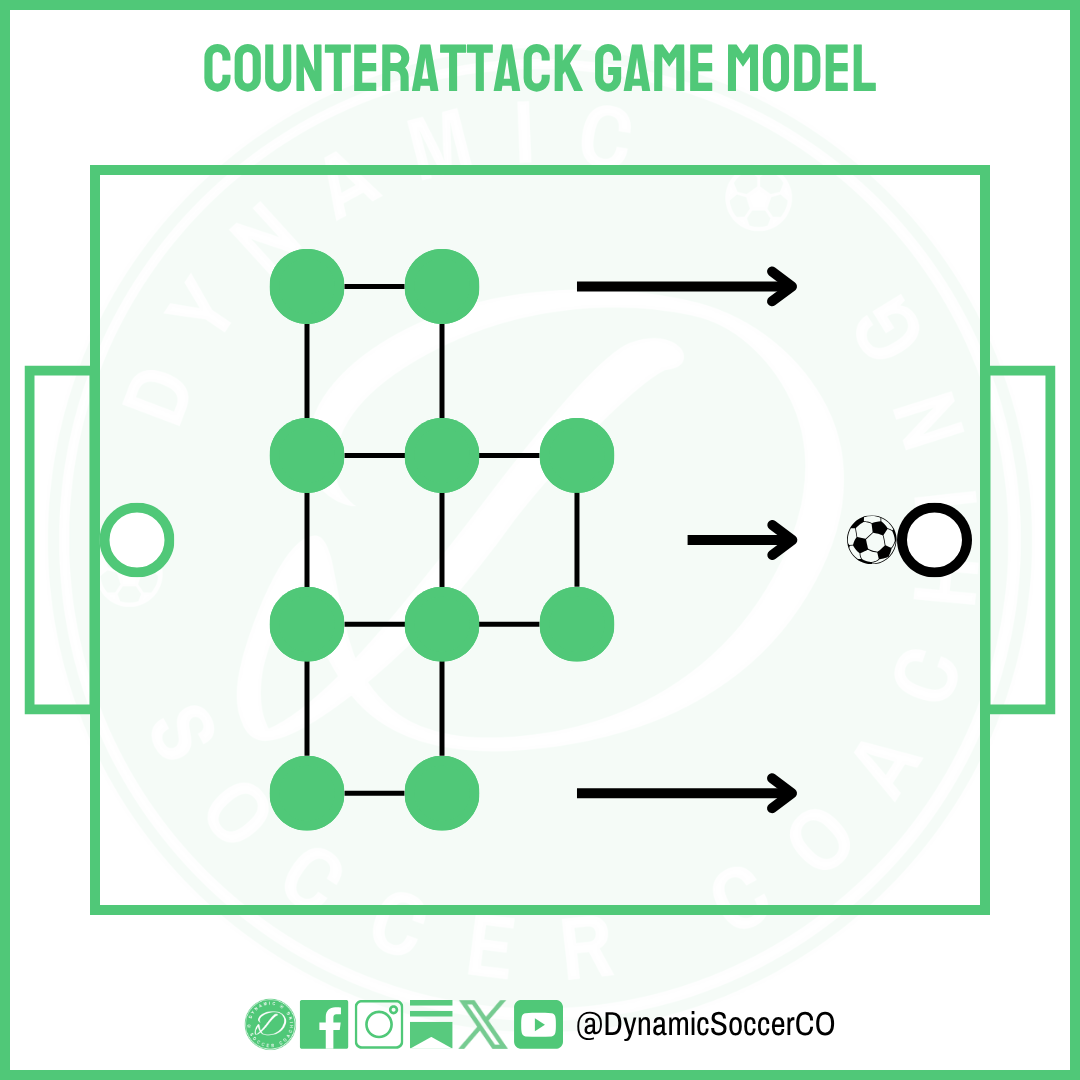
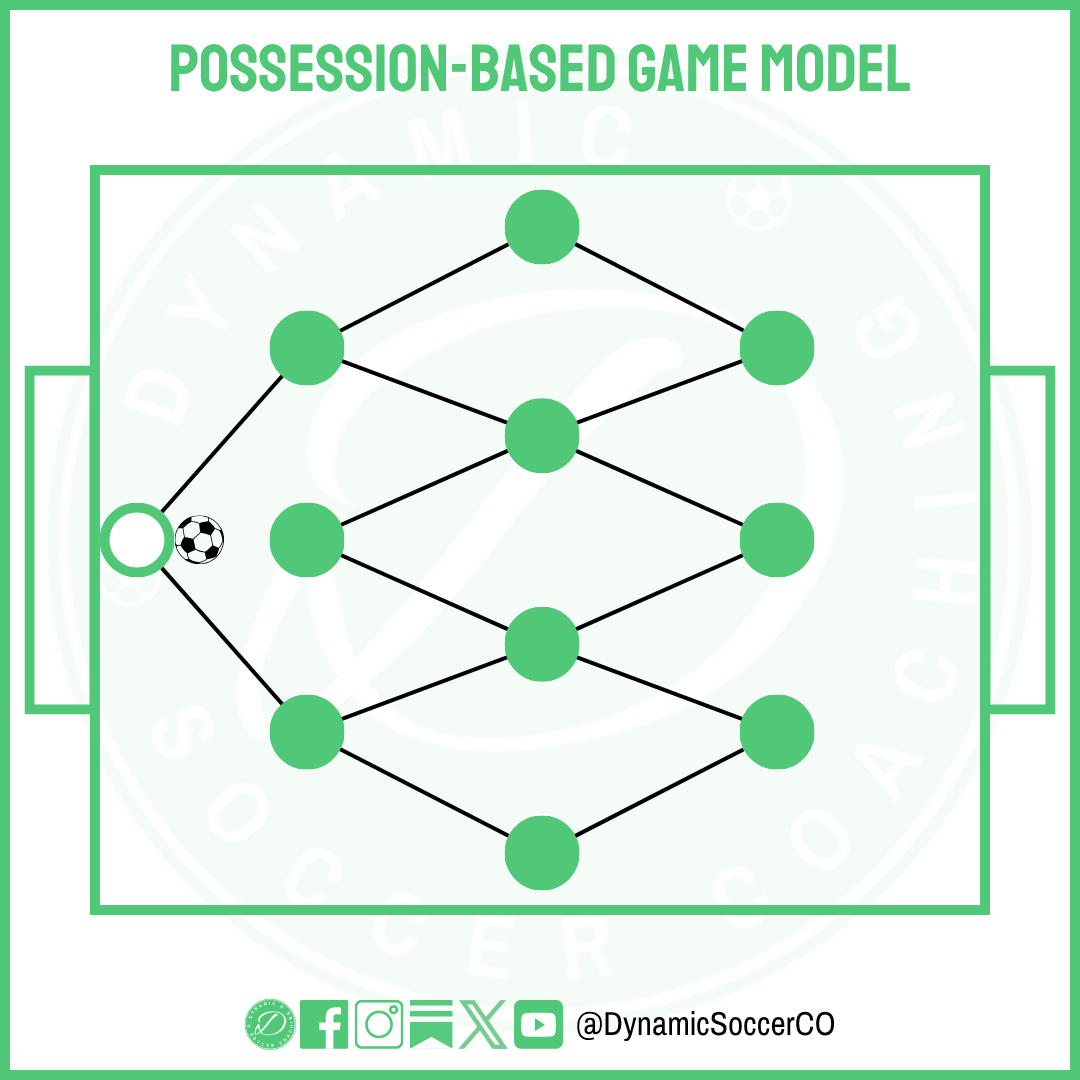
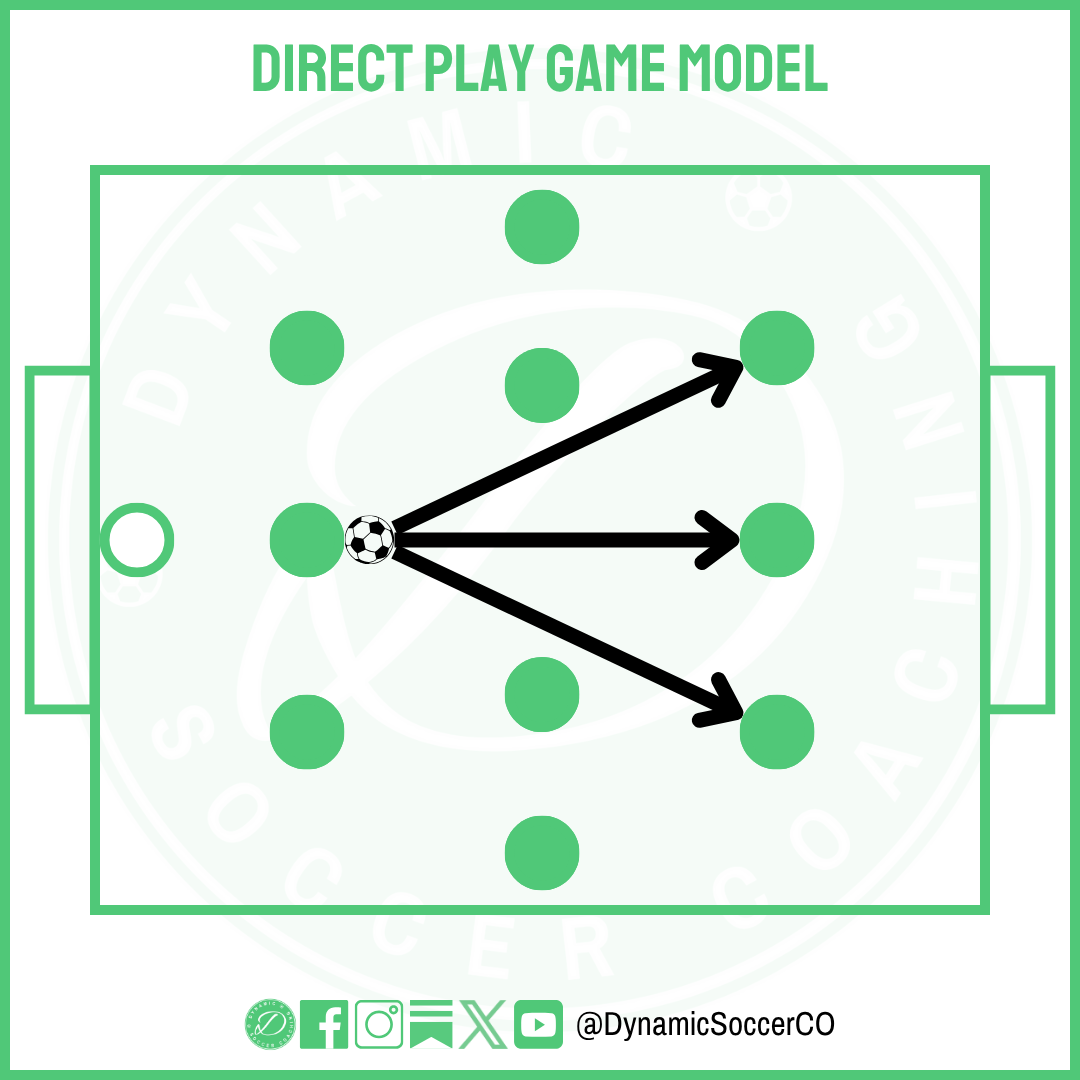
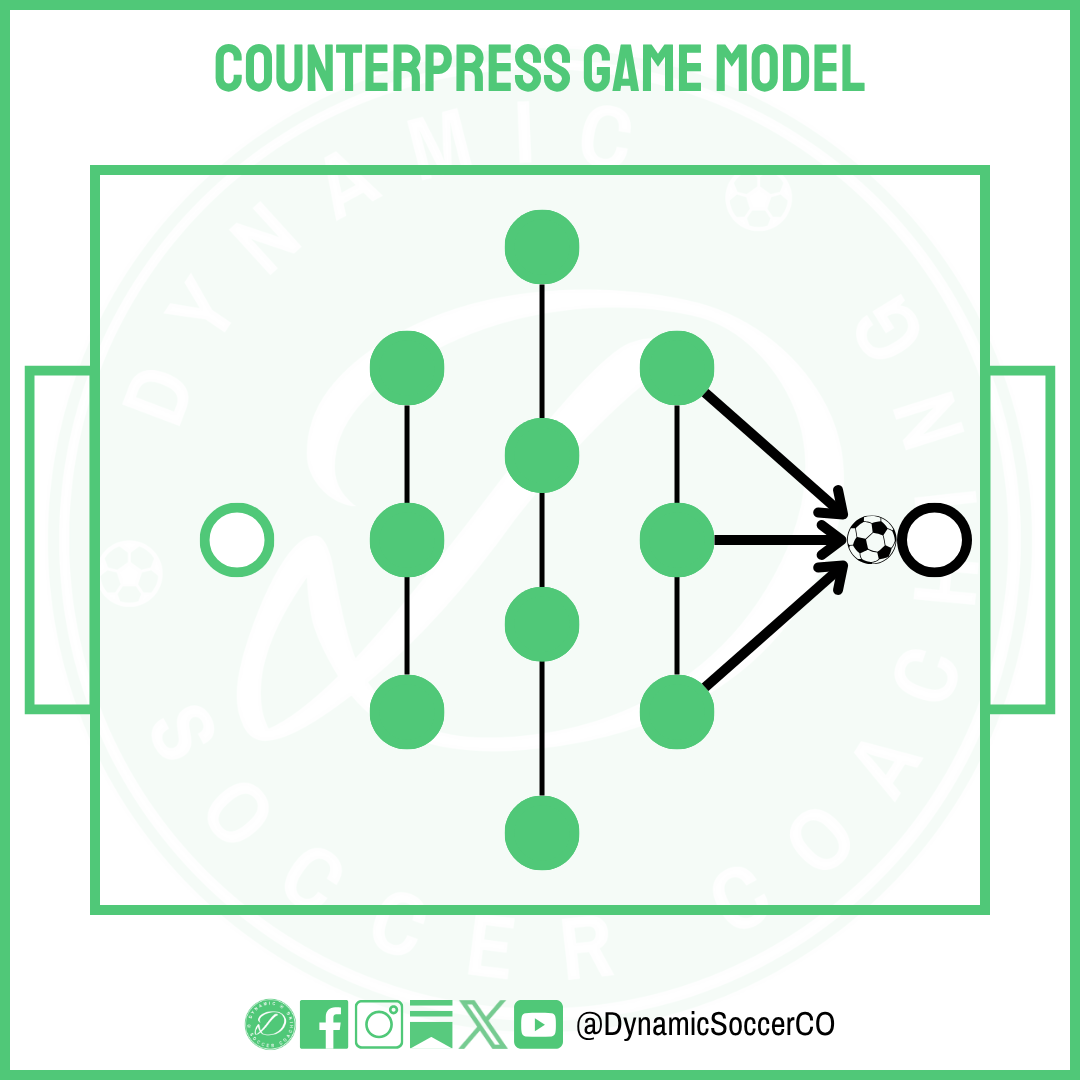
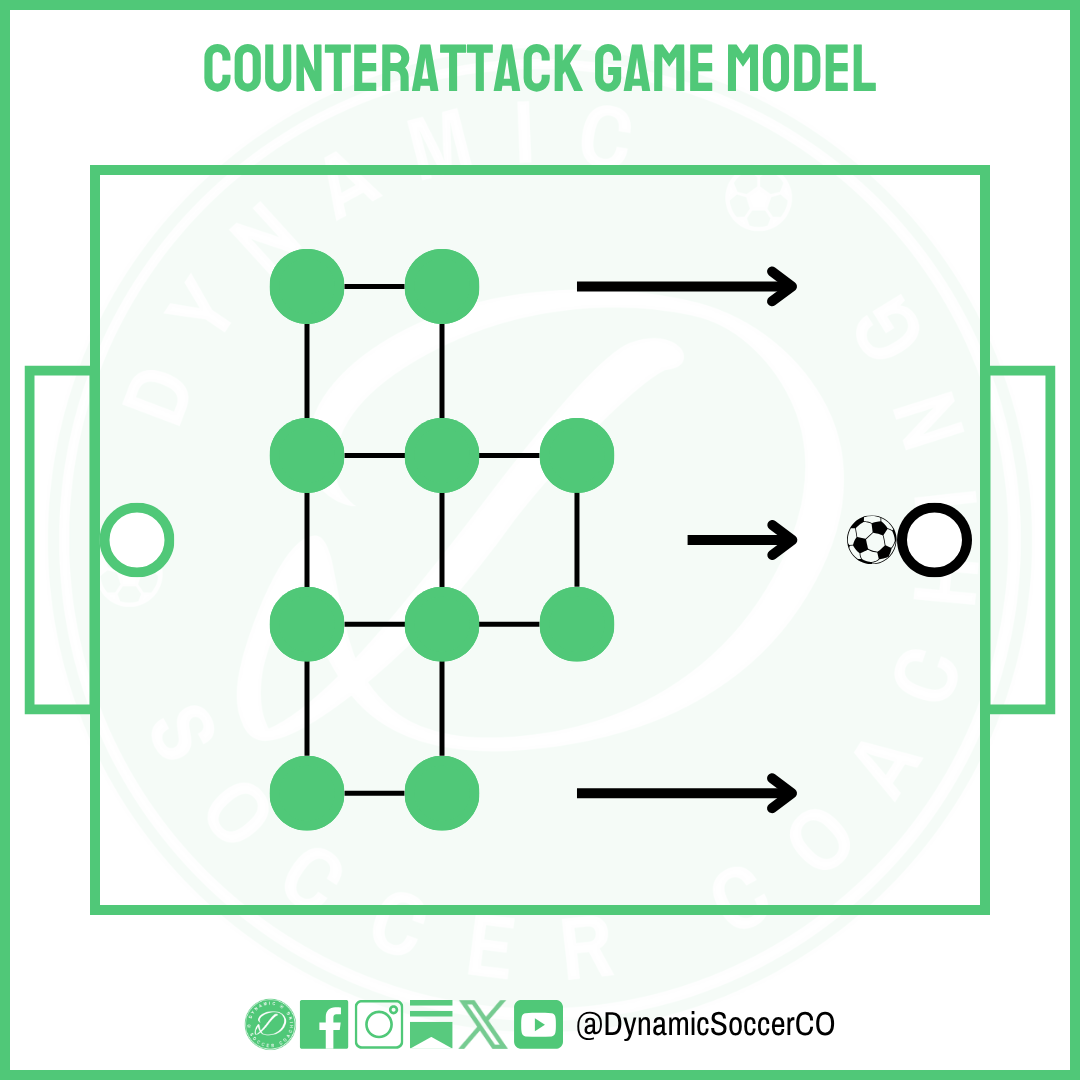
These aren’t the only styles of play (and there is some overlap between all of these), but this is a good starting point.
A style-based game model could be a good one for you if you like a particular style already and want your team to play accordingly.
Phase-Based Game Models
A phase-based game model is one in which a coach “divides” the game into attack and defense (and transition and restarts), and then generates ideas for each phase of the game.
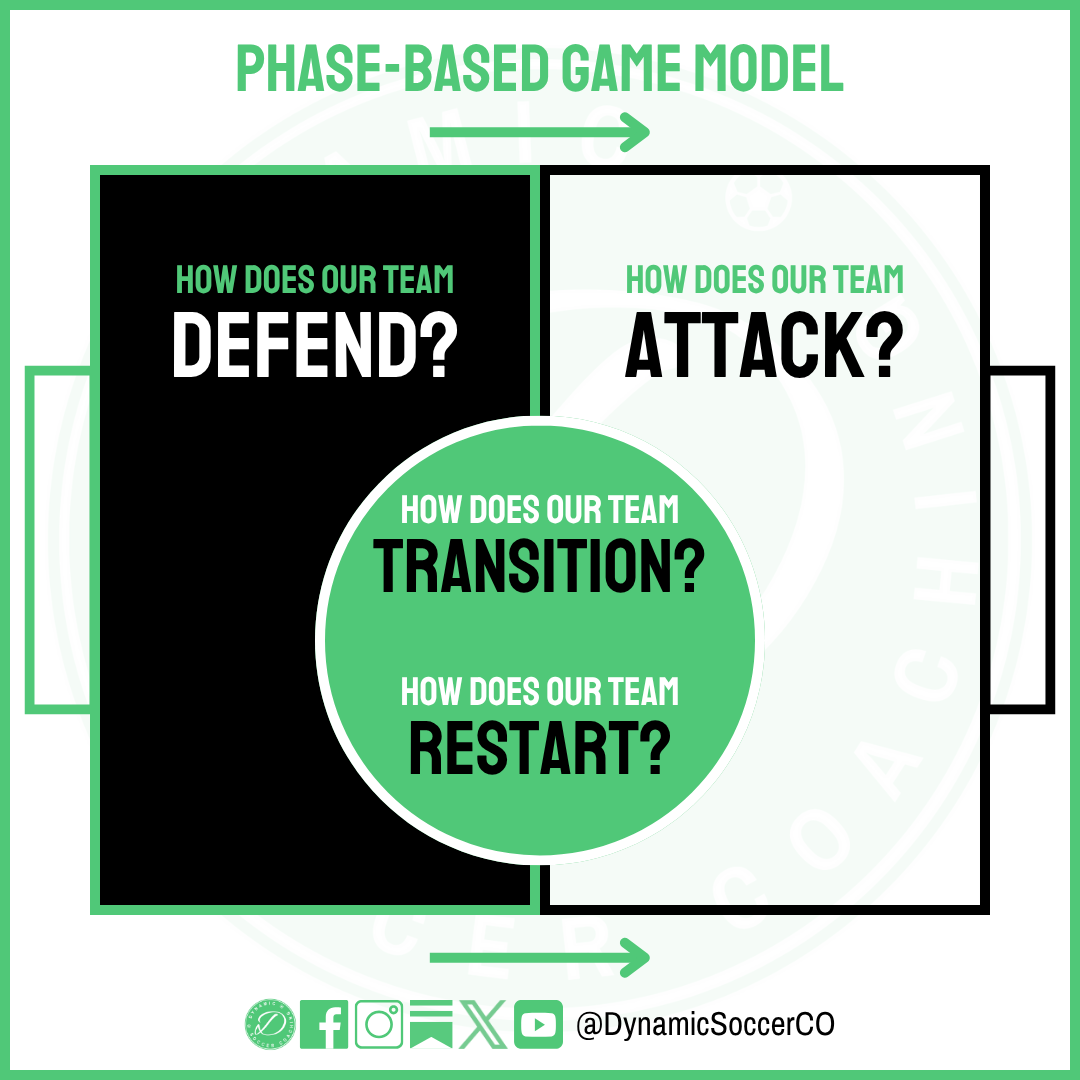
Essentially, the ideas in a phase-based game model answer these questions:
How does our team attack?
How does our team defend?
(How does our team transition? How does our team restart?)
This way of thinking is probably easier to understand than a style-based game model, though, again, there is room for overlap!
Thirds-Based Game Models
Finally, a thirds-based game model is one in which a coach sees the pitch as the defensive third, the middle third, and the final third, and then generates ideas about how the team plays in each third.
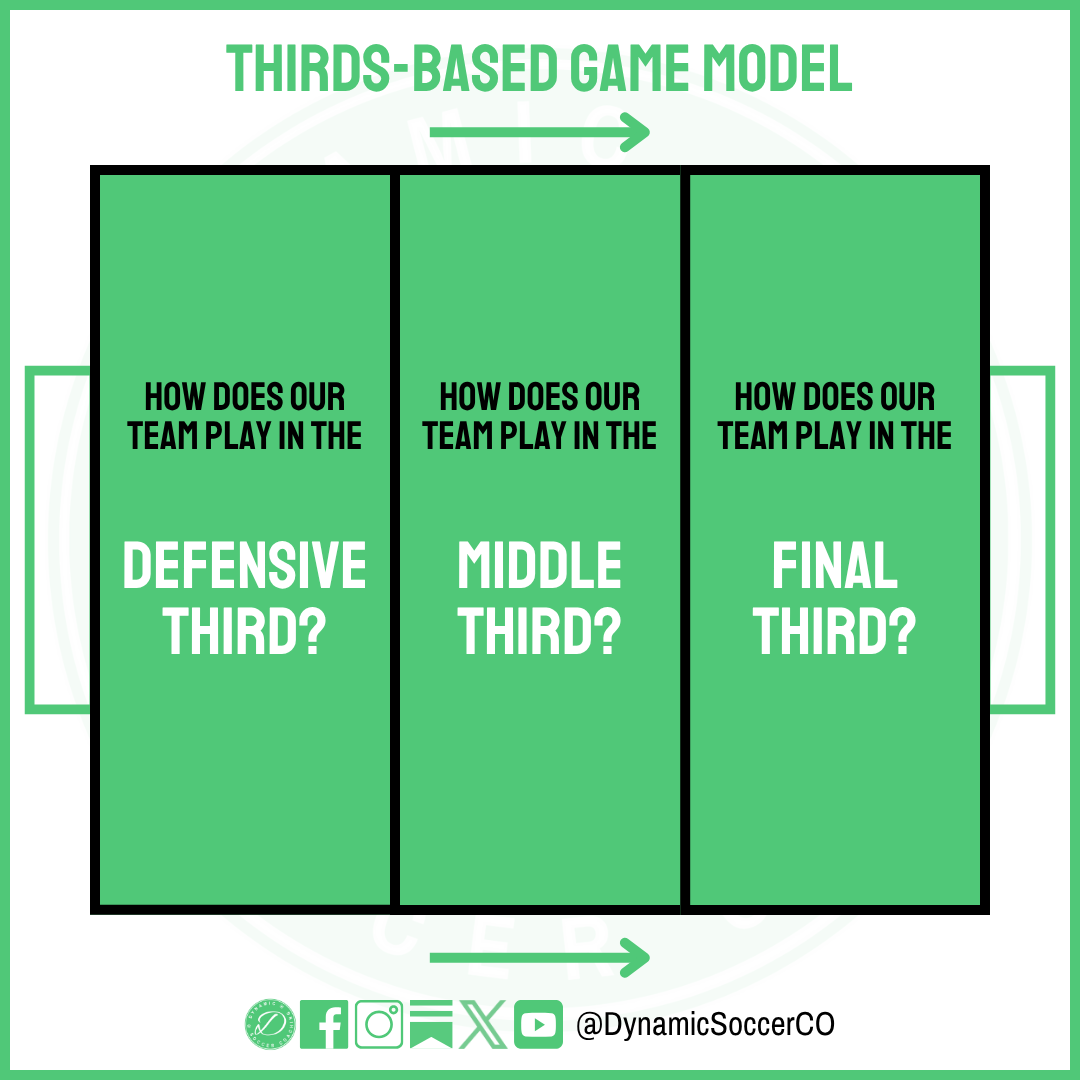
So a thirds-based game model framework might look like this:
How does our team play in the defensive third?
How does our team play in the middle third?
How does our team play in the final third?
The obvious strength of this model is that it’s the most objective because it deals with fixed space (each third of the field is roughly 40x80). It’s easy for the players to see which third of the field we’re playing in at any given time. This makes it an attractive option.
At this point I should say that there is huge potential for overlap between these three kinds of game models. They are never mutually exclusive. My own game model is a combination of all three: my ideas are how we will attack and defend (phase-based) through the pitch (thirds-based) according to Positional Play concepts (style-based).
So while we’re all trying to be more clear and coherent (and maybe objective) when it comes to thinking about our game models, there is lots of room for creativity and putting our own personality and philosophy into place. Just because we all have game model ideas, doesn’t mean those ideas have to be rigid and unchanging or that we all have to have the same ones.
Looking Ahead
Well, there you have it. A game model is the best way to improve our coaching. We need clear and coherent ideas about how our team plays, whether these ideas are style-based, phase-based, or thirds-based (or some combination of all three!).
As we progress in this series, we’ll think through how to build a game model. Next time we’ll chat about the game itself. Then we’ll think about our teams. After, we’ll think about our players. Eventually, we’ll also think about how to apply our game model to our training sessions.
In short, in this series we’re going to define our game models, which will help us design our training methods, which will then help us deliver our coaching magic.
By the end, our ideas will be clear and coherent, because that’s the most important thing I know to help our players learn, grow, and enjoy playing soccer!
See you next time!


